Written by Kevin Chen · Published October 29, 2026 · 12 min read
The best lotion for tattoo aftercare is a plain, fragrance-free, water-based lotion with simple moisturizers such as glycerin or ceramides. WebMD advises switching from ointment to fragrance-free lotion after about 5 days. A thin layer goes on 2 to 3 times a day for 2 to 4 weeks. Scented, alcohol-heavy and exfoliating formulas stay off the skin until the tattoo has fully healed.
Key Takeaways
A good tattoo lotion is fragrance-free, alcohol-free and water-based, with glycerin, ceramides or colloidal oatmeal.
WebMD places the switch from ointment to lotion at about day 5, and Healthline places lotion use in days 6 to 14.
A pea-sized amount covers a palm-sized tattoo, and the skin should look satin, never wet or shiny.
Fragrance, essential oils, drying alcohol, exfoliating acids and retinol wait until the skin is fully healed.
Healed tattoos can take almost any moisturizer, plus a water-resistant sunscreen of SPF 30 or higher.
What Is the Best Lotion for Tattoo Aftercare?
The best lotion for tattoo aftercare is a simple, fragrance-free, water-based formula that keeps healing skin soft without a heavy coat. The American Academy of Dermatology recommends a water-based lotion when tattooed skin feels dry. A short ingredient list with no fragrance, dyes or drying alcohol matters more than a brand name or a tattoo label.
A fresh tattoo is a shallow wound, so the lotion has one simple job. The lotion holds water in the skin and calms the tightness and itch of healing. Our tattoo aftercare guidance follows the same rule, where plain and gentle beats fancy and scented.
Search results for the best tattoo aftercare lotion lean on product rankings with dozens of picks. Product rankings change every year, while ingredient rules stay the same. A good lotion for tattoo aftercare becomes easy to spot once you can read the ingredient label.
Which Ingredients Should a Lotion for Tattoo Aftercare Contain?
A lotion for tattoo aftercare should contain gentle humectants, emollients and barrier lipids that hydrate the skin without irritating it. Humectants are ingredients that pull water into the skin. Emollients are oils or fats that smooth and soften the skin surface.
Five helpful ingredients show up on gentle labels:
Glycerin, a humectant that draws water into the outer skin layer.
Ceramides, natural skin fats that help rebuild the moisture barrier.
Dimethicone, a light silicone that slows water loss without a greasy film.
Colloidal oatmeal, finely ground oats that calm dryness and itch.
Panthenol, also called provitamin B5, a humectant that softens dry, flaky skin.
Healthline advises a fragrance-free, alcohol-free product during the lotion stage of healing. A label with glycerin or ceramides near the top of the list is a strong starting point. Ingredient lists run from highest to lowest amount, so the first five entries describe the bulk of the formula.
Evidence on single ingredients for tattoos is thin. A 2022 panthenol study by Schmid and colleagues tested a 2.5% dexpanthenol wash on 57 people for 14 days. The panthenol study had no placebo group and was funded by the manufacturer, so the results show tolerance rather than faster healing. Knowing the helpful ingredients makes the harmful ingredients easier to spot.
Which Ingredients Should You Avoid in Tattoo Lotion?
Avoid fragrance, essential oils, drying alcohol, exfoliating acids, retinol and heavy pure petroleum jelly in tattoo lotion while the skin heals. Fragrance leads the list because scent chemicals are a known trigger of contact allergy. A five-country study in the British Journal of Dermatology found fragrance mix I allergy in 2.6% of the general population.
Fragrance mix II allergy affected 1.9% of the same population in that study. Labels can hide scent under the words parfum, aroma or essential oil. Unscented and fragrance-free are different claims, because an unscented product can contain a masking fragrance. Fragrance-free on the front and no parfum in the ingredient list is the reading to trust.
Drying alcohols such as denatured alcohol pull water from damaged skin. Exfoliating acids such as glycolic acid and salicylic acid speed up skin shedding. Retinol speeds shedding as well, so these actives belong on fully healed skin only.
Pure petroleum jelly divides expert opinion. Cleveland Clinic advises skipping petroleum jelly until the tattoo heals because the jelly can block pores. The American Academy of Dermatology states that petroleum-based products can cause ink to fade. Healthline warns against 100% petroleum early on but calls blended ointments like Aquaphor generally safe.
The ingredient guide above pairs each helpful ingredient with the ingredient to skip while healing. No large controlled trial compares lotion and ointment on fresh tattoos, so these positions rest on clinical experience. Those ingredient warnings shape which lotion types suit a new tattoo.
Which Lotion Types Work for a New Tattoo?
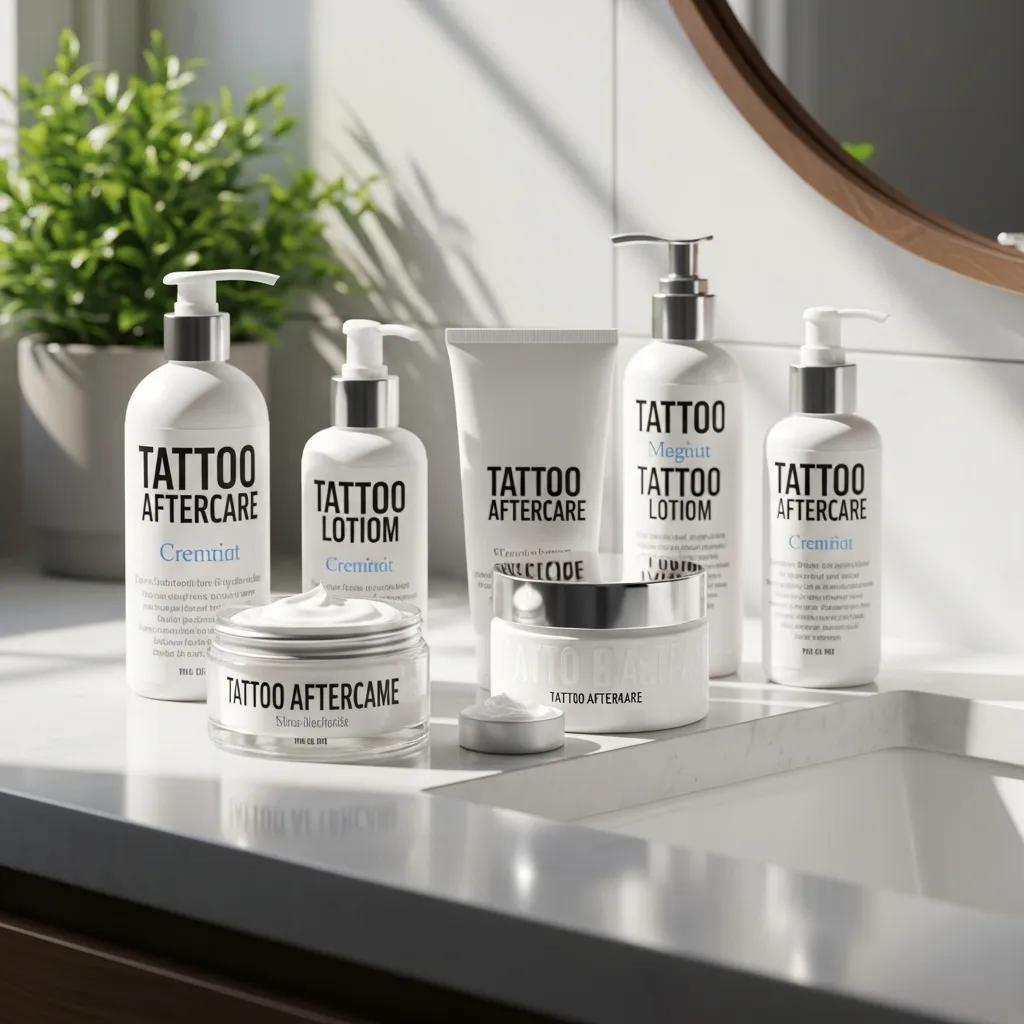
Plain fragrance-free body lotions, ceramide lotions and colloidal oatmeal lotions work for a new tattoo once the ointment phase ends. People searching for the best lotion for new tattoo aftercare usually weigh six product types. The main difference between the types is how heavy the layer feels and how much scent the formula carries.
Common lotion types for tattoo aftercare compared
Lotion type
What it does
When to use it
Watch for
Plain fragrance-free body lotion
Light hydration with glycerin and oils
From about day 5 onward
Masking scent in “unscented” versions
Ceramide lotion or cream
Supports the moisture barrier
Peeling stage and healed skin
Thick creams need a thinner layer
Colloidal oatmeal lotion
Calms dryness and itch
Itchy peeling stage, weeks 2 to 4
Skip with a known oat allergy
Petrolatum ointment blend
Seals moisture in
First days, when the artist advises
Heavy layers trap moisture
Tattoo balm or butter
Plant oils and butters soften skin
Late healing and healed skin
Essential oils and added scent
Scented body lotion
Hydration plus perfume
Healed skin only
Fragrance allergy risk
The table shows that the type matters less than the label inside the type. Familiar drugstore names such as Lubriderm, Aveeno, CeraVe, Cetaphil and Vanicream sell fragrance-free versions in these categories. The ingredient label matters more than the logo, so a fragrance-free version of a scented product line still needs a full read.
Shoppers typing “best tattoo lotion aftercare” into a search bar want the same answer, which is fragrance-free and simple. Picking the type is half the decision, and timing the switch from ointment to lotion is the other half.
When Should You Switch From Ointment to Lotion?
Switch from ointment to lotion around day 5 or 6, once the tattoo stops oozing and feels tight or flaky. WebMD advises switching to a fragrance-free lotion after 5 days and continuing for 2 to 4 weeks. Healthline places lotion use in days 6 to 14, applied several times daily.
Cleveland Clinic recommends moisturizing twice a day from week 1, which suits artists who skip ointment entirely. The three sources agree that lotion takes over around day 5, when oozing stops and flaking begins. The skin itself gives clear signals for the switch:
Clear or tinted fluid no longer seeps from the tattoo.
The surface feels tight, dry or slightly rough.
Thin flakes or a light shine of new skin appear.
Your artist’s written instructions take priority, because wrapping methods change the timeline. Adhesive film dressings follow their own removal schedule, set by the artist who applied them. Once lotion replaces ointment, the amount you apply decides whether the skin can breathe.
The timeline graphic sums up the key lotion numbers from WebMD, Cleveland Clinic and the American Academy of Dermatology. Each number on the timeline returns in the sections on amount, frequency and sun care.
How Much Lotion Should You Put on a Tattoo?
One pea-sized amount of lotion covers a palm-sized tattoo in a thin, even layer. The skin should look satin after the lotion sinks in, never wet or shiny. A larger piece on a forearm or calf needs more lotion, but the layer stays just as thin.
Too much lotion keeps the surface soggy, and soggy scabs soften and lift early. Tattoo artists interviewed by ELLE warn that overly wet tattoos can lose scabs too soon, which can pull ink with them. Blot any shine with a clean paper towel after a few minutes.
A thin layer also lets the skin breathe and shed dead cells on schedule. The right amount stays the same at every application, so the next question is how many applications a day the skin needs.
How Often Should You Apply Lotion to a Healing Tattoo?
Apply lotion to a healing tattoo 2 to 3 times a day, after washing, for about 2 to 4 weeks. Cleveland Clinic recommends moisturizing twice a day through weeks 2 to 4, then as needed after two months. Twice a day is the baseline, and a third layer is for skin that feels tight.
A simple week-by-week lotion schedule looks like this:
Days 1 to 5, a thin layer of ointment or the artist’s chosen product after each wash.
Days 5 to 14, fragrance-free lotion 2 to 3 times a day.
Weeks 2 to 4, lotion whenever the skin feels tight or itchy during peeling.
After two months, lotion as needed, plus daily sunscreen outdoors.
Healing times vary from person to person. Medical News Today puts surface healing at 2 to 4 weeks, with deeper layers taking several months. Healthline notes that full healing can take as long as 6 months, with peeling typical in weeks 2 to 4.
Itch peaks during that peeling stage. A survey of 501 people in Dermatologic Surgery, led by Liszewski in 2015, found 21.2% reported an itchy tattoo. A thin layer of lotion eases itch better than scratching, and our healing aftercare advice lists the full daily schedule. A steady schedule pairs well with a steady application method.
How Do You Apply Tattoo Lotion Step by Step?
Apply tattoo lotion with clean hands onto clean, dry skin, using a thin layer and gentle strokes. Follow these 5 steps at each application:
Wash your hands with soap and water.
Wash the tattoo gently with mild, fragrance-free soap and warm, not hot, water.
Pat the tattoo dry with a clean paper towel and let the skin air-dry fully.
Spread a pea-sized amount of lotion in a thin layer with light strokes.
Blot off any shine with a clean paper towel after a few minutes.
The five application steps in the graphic match the numbered list above. Cleveland Clinic recommends warm rather than hot water for washing a new tattoo. A pump bottle keeps fingers out of the product, which lowers the chance of contamination compared with an open tub.
The full guide to proper aftercare steps covers washing, sleeping and clothing in the first weeks. The same clean habits carry over once the tattoo heals and the lotion choice widens.
What Is the Best Lotion for Healed Tattoos?
The best lotion for healed tattoos is any daily moisturizer that suits your skin, paired with SPF 30 or higher sunscreen. Scented lotions and richer creams are fine on healed skin without fragrance sensitivity. Sun protection keeps healed ink sharp more than any lotion does.
The American Academy of Dermatology advises applying sunscreen 15 minutes before going out and reapplying at least every 2 hours. WebMD recommends moisturizing healed tattoos daily, especially on the hands, where a tattoo can fade quickly. Daily moisture keeps the top layer of skin smooth, so the ink underneath looks clearer.
Black and grey realism tattoo work relies on soft grey gradients that read clearest on smooth, hydrated skin. Hydration and sunscreen together form the long-term routine, and a few side questions round out the picture.
What Else Should You Know About Tattoo Lotion?
Tattoo lotion raises a handful of side questions about overuse, specific brands, sensitive skin and warning signs. The short answers below link to deeper guides on each topic.
Can You Use Too Much Lotion on a Tattoo?
Yes, too much lotion on a tattoo keeps scabs soft and can lift them early. Over-moisturizing sits next to picking and soaking on the list of common aftercare mistakes. A thin, satin layer prevents the problem.
Is Cetaphil Lotion Safe for a New Tattoo?
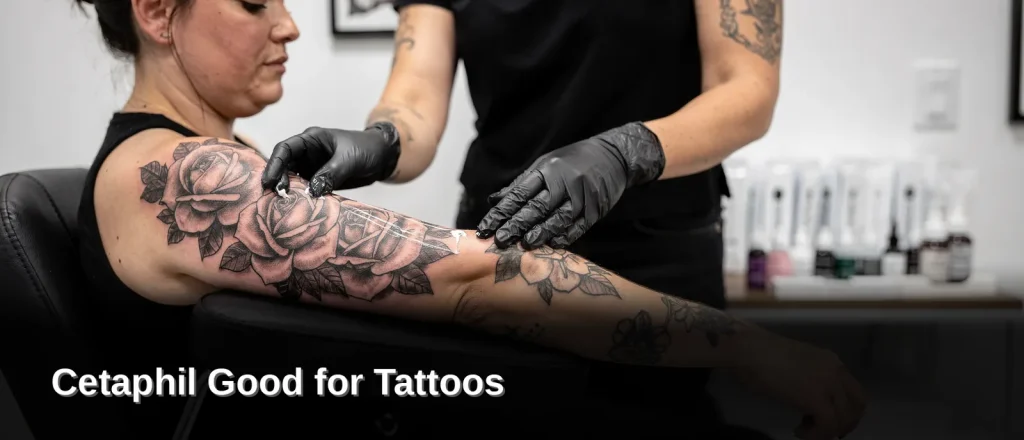
Yes, fragrance-free Cetaphil lotion is a gentle option for a new tattoo after the ointment stage. The full breakdown of Cetaphil on tattoos covers which versions to pick. The same label rules apply to any similar drugstore lotion.
Which Lotion Suits Sensitive Skin?
A lotion for sensitive skin has a short ingredient list, no fragrance, no dyes and no essential oils. A small patch test on the inner arm shows whether the skin reacts before full use. The guide to reactive skin aftercare compares options for reactive skin in more depth.
Does Fine Line Work Need a Different Lotion?
No, fine line work uses the same fragrance-free lotion and the same thin layer as bolder styles. Pieces of delicate fine line work follow the same day 5 switch and the same 2 to 4 week lotion phase. A light hand during application protects thin lines from rubbing.
When Is Lotion Not Enough?
Lotion is not enough when the skin shows signs of infection or allergy. Cleveland Clinic lists fever, skin that feels hot, a bad odour, heavy drainage, worsening pain and red streaks as warning signs. The American Academy of Dermatology advises a dermatologist visit for a reaction that lasts 1 to 2 weeks.
See a doctor or pharmacist when any of those signs appear, and stop applying new products. The guide to tattoo infection signs explains each symptom in plain terms.
Does Lotion Keep a Tattoo Bright?
Yes, lotion keeps a healed tattoo looking bright by smoothing dry, flaky skin over the ink. Sunscreen does the heavier lifting against fading, according to the American Academy of Dermatology. The guide to ink retention tips covers both habits.
Are Tattoo-Specific Lotions Worth the Price?
Tattoo-specific lotions are worth the price only when the ingredient list beats a plain drugstore lotion. Lists of the best lotions for tattoo aftercare place many tattoo-branded balms near the top. Those balms carry no extra medical approval, and some contain essential oils that irritate healing skin.
Frequently Asked Questions
What Do Tattoo Artists Recommend for Aftercare?
Tattoo artists recommend gentle washing, a thin ointment layer for the first days, then a fragrance-free lotion. Artists asked for the best moisturizer for tattoo aftercare usually name a plain, unscented drugstore lotion. Written instructions from your own artist take priority over general advice.
Is Coconut Oil Good for New Tattoos?
No, coconut oil suits healed tattoos better than fresh ones. Coconut oil forms a heavy, greasy layer that can trap moisture on healing skin. Kitchen jars also pick up bacteria from spoons and fingers.
Can You Put Sunscreen on a Healing Tattoo?
No, sunscreen stays off a healing tattoo until the skin has fully healed, according to Medical News Today. Loose clothing and shade protect the tattoo in the meantime. After healing, a water-resistant sunscreen of SPF 30 or higher becomes a daily habit.
Can You Put Baby Lotion on a Tattoo?
Yes, baby lotion works on a tattoo only in a fragrance-free version. Standard baby lotions can contain added fragrance, which raises the risk of irritation on healing skin. The ingredient label decides, just as with any other lotion.
How Long Should You Keep Using Lotion on a Tattoo?
Keep using lotion on a tattoo for 2 to 4 weeks during active healing, then as needed for life. Cleveland Clinic moves lotion to an as-needed basis after two months. Healed skin still benefits from daily moisture and sunscreen.
How Does The KCHN Tattoos Help With Tattoo Aftercare?
The KCHN Tattoos helps with tattoo aftercare by giving every client written instructions and a clear product plan before leaving the chair. The instructions name the ointment stage, the switch to lotion and the signs that call for a doctor. Clients leave knowing the best lotion for tattoo aftercare for their own skin and placement.
We explain the full studio aftercare routine during the appointment, so no step is left to guesswork. Healing questions come up after clients get home, and a quick message saves days of worry about dry or itchy skin.
Clients can send aftercare questions at any stage of healing, with photos when helpful. Quick photos let us spot dryness, irritation or overuse of lotion early.
A fragrance-free lotion, a thin layer and steady sun protection keep every piece from the KCHN studio looking sharp for years.
By Kevin Chen, owner and head black & grey realism artist at The Kchn Tattoos, ScarboroughCetaphil’s unscented moisturizing lotion suits tattoo aftercare...
Quick Answer: The best tattoo aftercare products for sensitive skin in Canada are fragrance-free, alcohol-free, hypoallergenic formulas containing ceramides, panthenol, aloe vera,...



 ·October 1, 2026·8 min read