By Kevin Chen, The Kchn Tattoos
At The Kchn Tattoos, located at 240 Alton Towers Cir Unit A4, Scarborough, ON M1V 4P2, serving the Greater Toronto Area, we treat hygiene and safety as non-negotiable. Our sterile protocols protect client health and support consistent tattoo outcomes. Below we outline the sterilization methods, instruments, and artist training we use to meet Ontario regulatory standards and reduce infection risk. We also explain post-procedure care so you understand how our practices support safe healing.
Key Takeaways
- The Kchn Tattoos studio prioritizes strict hygiene and safety standards to ensure a sterile tattooing environment in compliance with Ontario Regulation 136/18 under the Health Protection and Promotion Act.
- Autoclave sterilization that meets Health Canada and Canadian Standards Association (CSA) standards, combined with single-use needles, prevents infection and cross-contamination.
- Tattoo artists follow rigorous hygiene protocols, including PPE use and hand hygiene, to protect client health.
- Cleaning and disinfecting tools and surfaces with medical-grade disinfectants maintain a safe and sanitary studio.
- Comprehensive artist training in bloodborne pathogens and regulatory compliance supports ongoing safety.
- Visible sterilization logs and BodySafe inspection notices let clients verify our standards for themselves.
- Daily cleaning protocols and regular equipment checks ensure continuous studio sanitation and client safety.
- Clients are advised on proper aftercare, including cleaning, moisturizing, and avoiding sun exposure to prevent infection.
What Are the Comprehensive Tattoo Sterilization Procedures We Follow Under Ontario Regulation 136/18?
Our sterilization program follows the requirements of Ontario Regulation 136/18 (Personal Service Settings) under Ontario’s Health Protection and Promotion Act. We control microbial risk at every stage of a session by adhering to validated equipment standards and written procedures for decontamination, packaging, autoclave cycles, and storage of reusable items. Each step is documented to demonstrate compliance with Toronto Public Health’s BodySafe program, which inspects tattoo studios classified as Critical risk services at least annually and on a complaint basis.
- Autoclave Sterilization: All reusable equipment is sterilized using autoclaves that meet Health Canada and CSA standards. Laboratory spore tests are conducted at minimum every fourteen days to validate sterilization efficacy.
- Single-Use Needles and Supplies: A new sterile needle is opened in front of every client. Razors, stencils, and ink caps are all single use. Tattoo machines are covered with single-use plastic film between clients to prevent contamination.
- Documentation of Sterilization Logs and BodySafe Notices: We maintain detailed sterilization logs to track the sterilization process and display Toronto Public Health’s BodySafe inspection notices prominently at the studio.
Unacceptable sterilization methods under this regulation, which we do not use, include glass bead sterilizers, UV boxes, chemiclaves, ultrasonic cleaners used alone, pressure cookers, microwaves, glutaraldehyde, and boiling water.
How Do We Use Autoclaves and Sterilization Equipment to Prevent Infection?
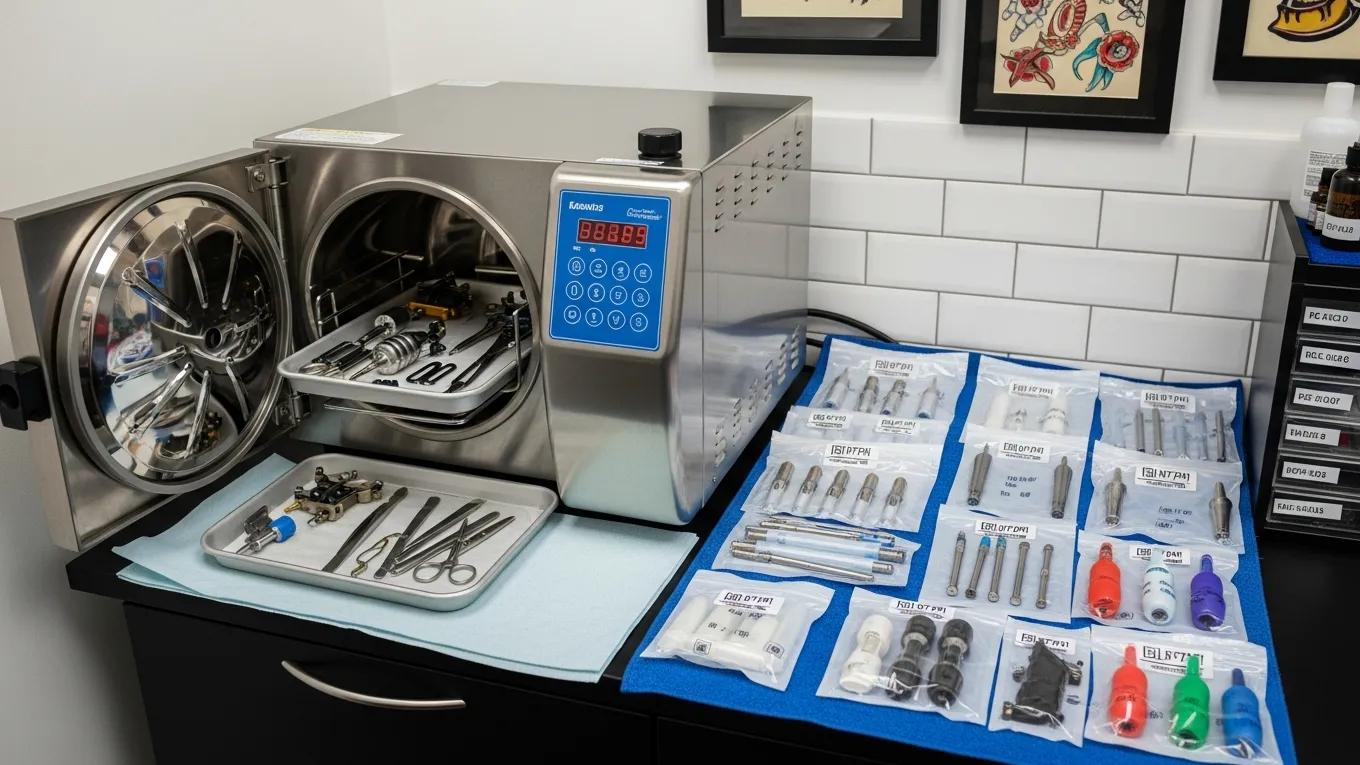
Autoclave cycles are validated to defined time, temperature, and pressure parameters to achieve sterilization. We decontaminate instruments, package them in medical-grade pouches, run documented autoclave cycles, and store items in a sterile area until use. This controlled workflow reduces the chance of viable pathogens on reusable tools.
- High-Pressure Steam: The autoclave uses high-pressure steam to penetrate and sterilize all surfaces of the equipment.
- Single-Use Supplies: We complement autoclave sterilization with the use of single-use supplies, further reducing infection risk.
- Visible Sterilization Logs: Our sterilization logs are available for client review, providing transparency and assurance.
What Are the Steps for Cleaning and Disinfecting Tattoo Tools and Surfaces?
Cleaning precedes disinfection: we remove organic material, then apply medical-grade disinfectants to non-critical surfaces and clean instruments prior to sterilization. Barrier films are used on high-touch areas and manufacturer instructions for contact time and dilution are followed to ensure efficacy.
- Use of Medical-Grade Disinfectants: Effective against a wide range of pathogens.
- Barrier Films for Surfaces: Applied to surfaces to prevent contamination during the tattooing process.
- Regular Cleaning Protocols: Staff follow strict cleaning protocols before and after each session to maintain hygiene.
How Do Our Tattoo Artist Hygiene Protocols Protect Client Health?
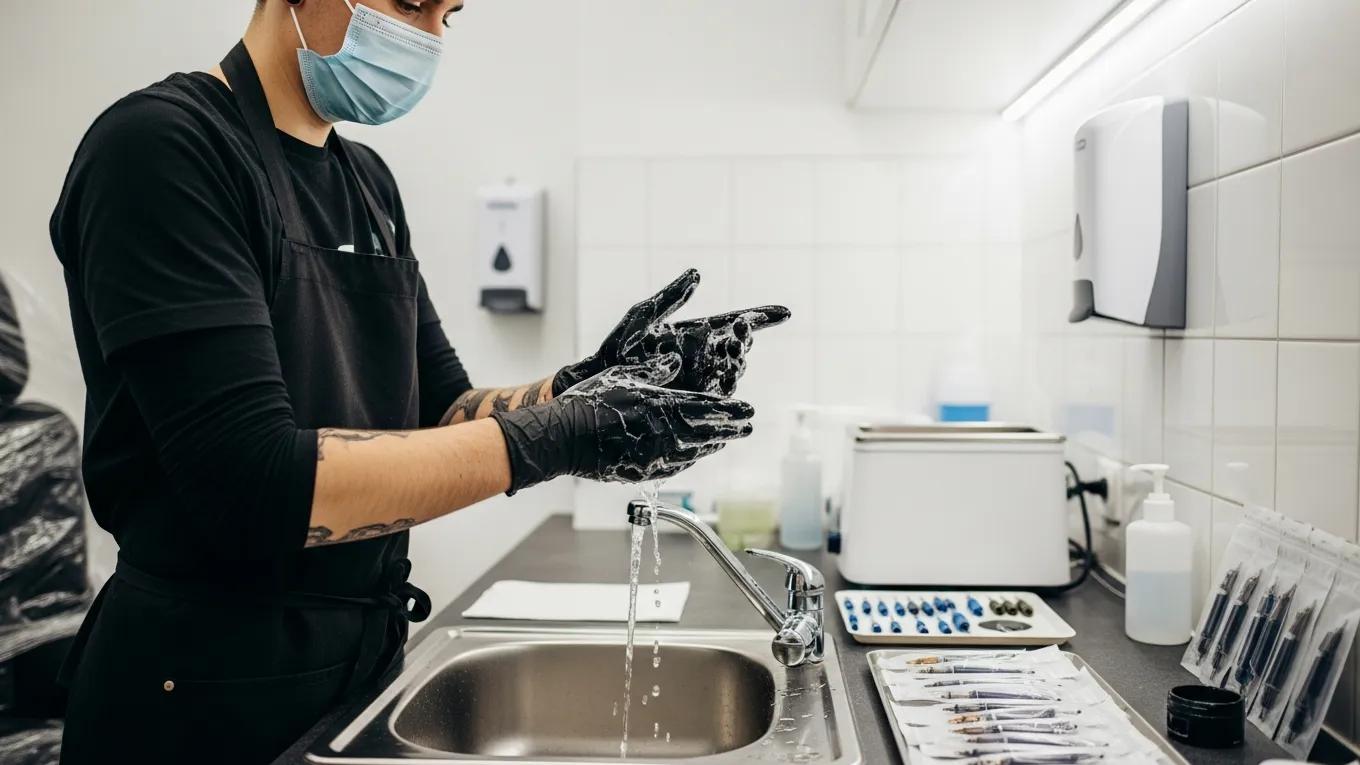
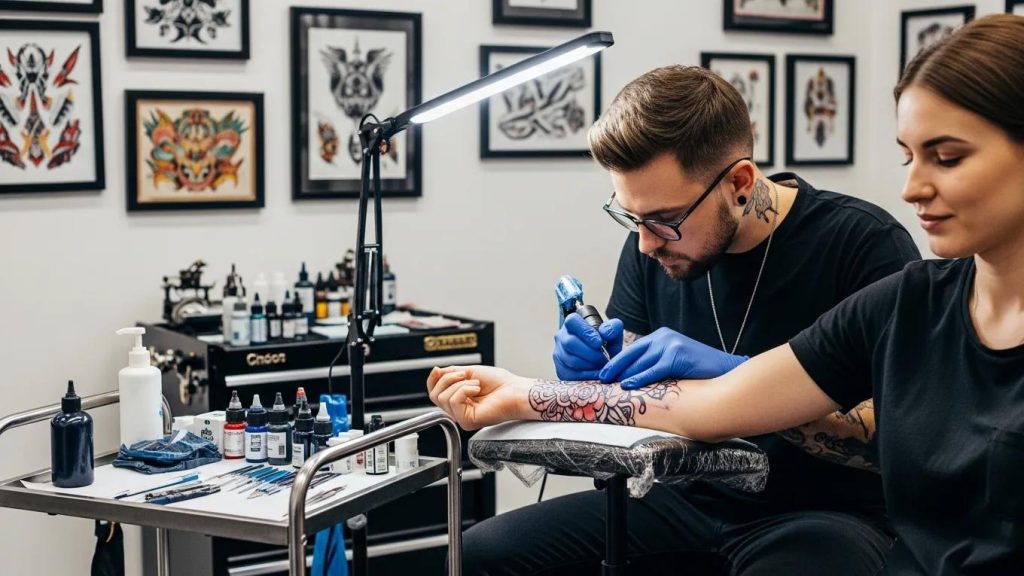
All artists at The Kchn Tattoos follow the same hygiene protocol regardless of style. This includes appropriate PPE, hand hygiene with soap or alcohol rub, aseptic handling of instruments, and pre-procedure client screening to identify risk factors that could affect healing.
- Personal Protective Equipment Usage: Artists wear gloves, masks, and aprons to minimize contamination risk.
- Hand Hygiene Practices: Regular handwashing and use of hand sanitizers are mandatory before and after each session.
What Personal Protective Equipment Do Our Artists Consistently Use?
The PPE ensemble creates multiple sterile barriers: gloves and masks reduce exposure to bloodborne agents; aprons protect clothing and skin. PPE is changed as protocols dictate to maintain integrity throughout sessions.
- Disposable Gloves: To prevent direct contact with blood and bodily fluids.
- Masks: To minimize respiratory transmission of pathogens.
- Aprons: To protect clothing and skin from contamination.
How Are Artists Trained and Certified in Safety and Hygiene Standards?
All artists complete certified bloodborne pathogen training and courses mandated by Toronto Public Health’s BodySafe program. Training covers aseptic technique, waste management, infection recognition, and regulatory compliance. Refresher training is provided periodically.
- Bloodborne Pathogen Training: Education on risks and mitigation of bloodborne pathogens.
- Health Regulations Compliance: Training on compliance with Ontario Regulation 136/18 and BodySafe requirements.
- Ongoing Education for Artists: Continuous updates on latest safety protocols.
What Infection Prevention Measures Are Implemented During Tattooing?
During tattooing, we apply point-of-care controls: workstation disinfection, sterile field setup, single-use disposables, and client screening. These controls interrupt common transmission routes and limit contamination.
- Sanitation Protocols: Workstations are sanitized before and after each session.
- Client Health Questionnaires: Required to identify risks before tattooing.
- Visible BodySafe Notices: Posted at the studio to confirm compliance.
How Does Our Studio Maintain a Sterile Environment Throughout Sessions?
Maintaining sterility requires scheduled cleaning, validated sterilization, appropriate storage, and staff adherence to hygiene protocols. These elements are monitored daily to keep the studio sterile during operations.
- Cleaning Protocols: Regular cleaning of all surfaces and equipment.
- Equipment Sterilization Methods: Use of autoclaves meeting Canadian standards.
- Staff Hygiene Practices: Regular handwashing and PPE use.
What Practices Minimize Cross-Contamination Risks in the Studio?
We minimize cross-contamination through single-use consumables, controlled glove changes, and barrier protection on surfaces. Workstations are disinfected between clients and instruments are aseptically handled.
- Use of Single-Use Needles: Each client receives a new sterile needle.
- Barrier Films and Gloves: Barrier films cover surfaces; gloves are changed frequently.
- Workstation Cleaning: Disinfection between clients.
Which Tattoo Studio Cleanliness Standards Define Our Safety Commitment?
Our standards align with Ontario Regulation 136/18, enforced through Toronto Public Health’s BodySafe program, covering sterilization validation, product selection, documentation, and routine audits.
- Sterilization and Equipment Standards: Equipment and procedures meet Canadian regulatory and standards agency requirements.
- Hygiene Practices: Regularly reviewed to comply with updated health regulations.
- Documentation and Transparency: Hygiene practices, sterilization logs, and BodySafe notices are available for client review.
How Do We Ensure Daily and Ongoing Studio Sanitation?
Daily sanitation tasks are scheduled and recorded. Staff perform opening and closing cleaning duties, inspect autoclave functioning, and stock sterile supplies. Any deviations prompt corrective action before client care resumes.
- Daily Cleaning Protocols: Comprehensive cleaning at start and end of each day.
- Regular Equipment Checks: Inspections for cleanliness and function.
- Client Health Screenings: Collection of contact information and questionnaire completion.
What Health and Safety Certifications Does Our Studio Hold?
The Kchn Tattoos shows clients its current Toronto Public Health BodySafe notice prominently posted at the premises along with detailed sterilization logs and documentation of all artists’ bloodborne pathogen training. We invite clients to review these documents in person to understand our safety systems.
- BodySafe Program Compliance: Verified and inspected by Toronto Public Health.
- Artist Training Certifications: Up-to-date bloodborne pathogen and regulatory training.
- Sterilization Documentation: Ongoing logs tracking autoclave cycles and sterilization efficacy.
The same strict hygiene protocol applies to every session we do here at The Kchn Tattoos, whether you’re coming for realism tattoos, fine line tattoos, or blackwork tattoos. You can view healed work examples in our portfolio, and learn more about our studio and the talented artists who make it exceptional. We warmly welcome you to contact us or drop by anytime to see our BodySafe notice and sterilization logs in person before you book your appointment.
Frequently Asked Questions
What should I look for when choosing a tattoo studio for hygiene and safety?
Look for a studio inspected under Toronto Public Health’s BodySafe program posting a current inspection notice, using validated autoclave sterilization meeting Health Canada and CSA standards, employing single-use needles and disposables, and with staff able to explain cleaning protocols and regulatory compliance.
How can I ensure my tattoo heals properly after the session?
Follow your artist’s aftercare plan: gentle cleansing, regular moisturization with fragrance-free product, and sun avoidance. Avoid picking scabs or exposing the tattoo to pools or baths until fully healed. Seek medical advice if signs of infection occur.
What are the signs of an infection in a new tattoo?
Increasing redness, swelling, warmth, pus, or persistent pain are signs of infection. Fever also warrants medical assessment. Early recognition prevents complications.
How often should I check my tattoo during the healing process?
Inspect your tattoo daily to monitor cleanliness, moisture, and any adverse changes. Contact your artist or a healthcare professional if abnormalities appear.
What should I do if I experience an allergic reaction to tattoo ink?
If you suspect a reaction, such as intense itching, rash, or swelling, avoid scratching, apply a cool compress, and consider an over-the-counter antihistamine. Seek medical evaluation if symptoms persist or worsen.
Are there any specific health conditions that may affect my tattoo experience?
Conditions such as diabetes, autoimmune disorders, clotting issues, or skin sensitivities can alter healing and risk. Blood-thinning medication or allergy history should be disclosed to your artist to adapt timing and aftercare. Consult your healthcare provider if uncertain.
What should I do if I have concerns about the hygiene practices at the studio?
Ask staff about their sterilization methods, cleaning schedules, and PPE usage. A reputable studio will openly share documentation and explain their practices. If unsatisfied, consider another studio with transparent safety protocols.
Our Team
- Kevin Chen (Kchen), owner, with over 14 years in black and grey realism.
- Tracy, over 5 years in fine line and custom lettering.
- YB, 3 years in realism and blackwork.
- Justin, 3 years in realism and blackwork.
- Caitlin handles client communication and booking.
Every artist follows the same hygiene protocols regardless of tattoo style to ensure your safety.
Conclusion
At The Kchn Tattoos, our hygiene systems, validated sterilization, and continuous staff training work together to protect client health and support optimal healing. We welcome you to review our procedures and documentation in person. Book a consultation to discuss safety, aftercare, and the technical aspects of your tattoo so you can proceed with confidence.