
Home / Tattoo aftercare
Healing guide
Tattoo aftercare & healing.
How your tattoo heals week by week, exactly how to care for it, what is normal and what is not, plus our artists’ advice for sensitive skin and managing pain on the day.
Quick answer
Wash gently with a fragrance-free cleanser, pat dry, and apply a thin layer of fragrance-free, alcohol-free moisturizer two to three times a day. Do not pick, scratch or soak it, keep it out of the sun, and expect the surface to heal in two to four weeks. If you have sensitive skin, look for ceramides, panthenol or aloe, and patch test new products first.
Healing timeline
Tattoo aftercare and healing, week by week.
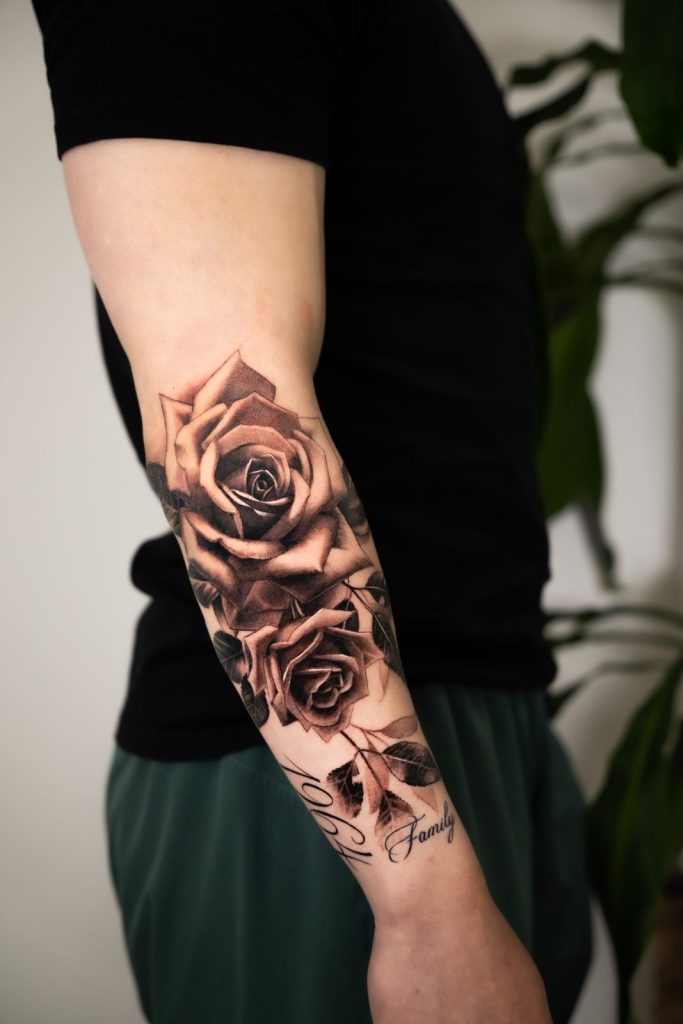
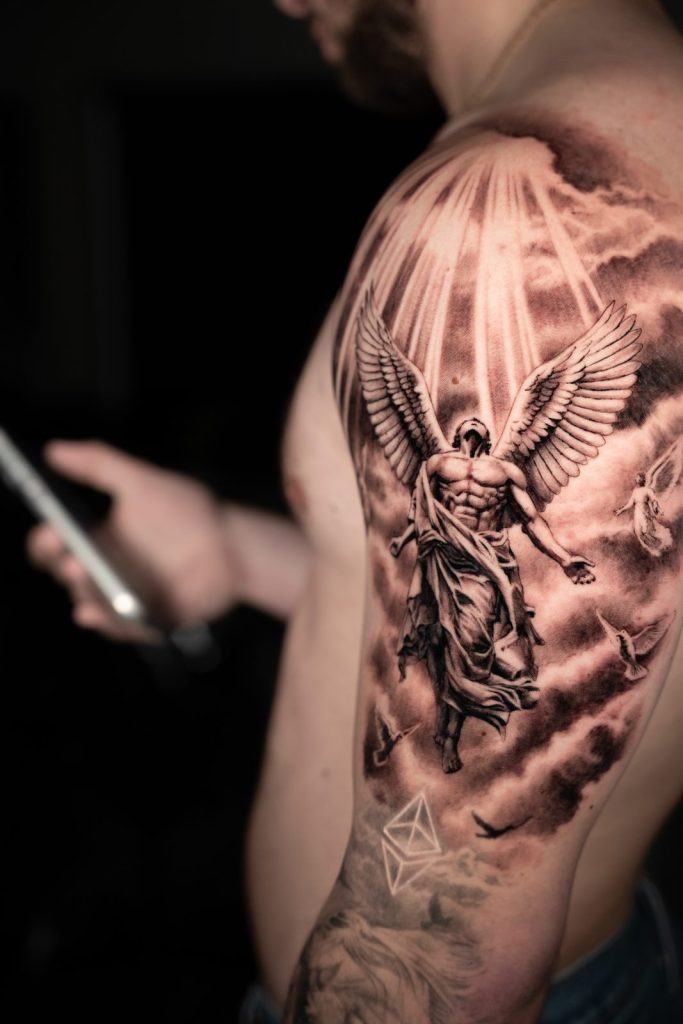
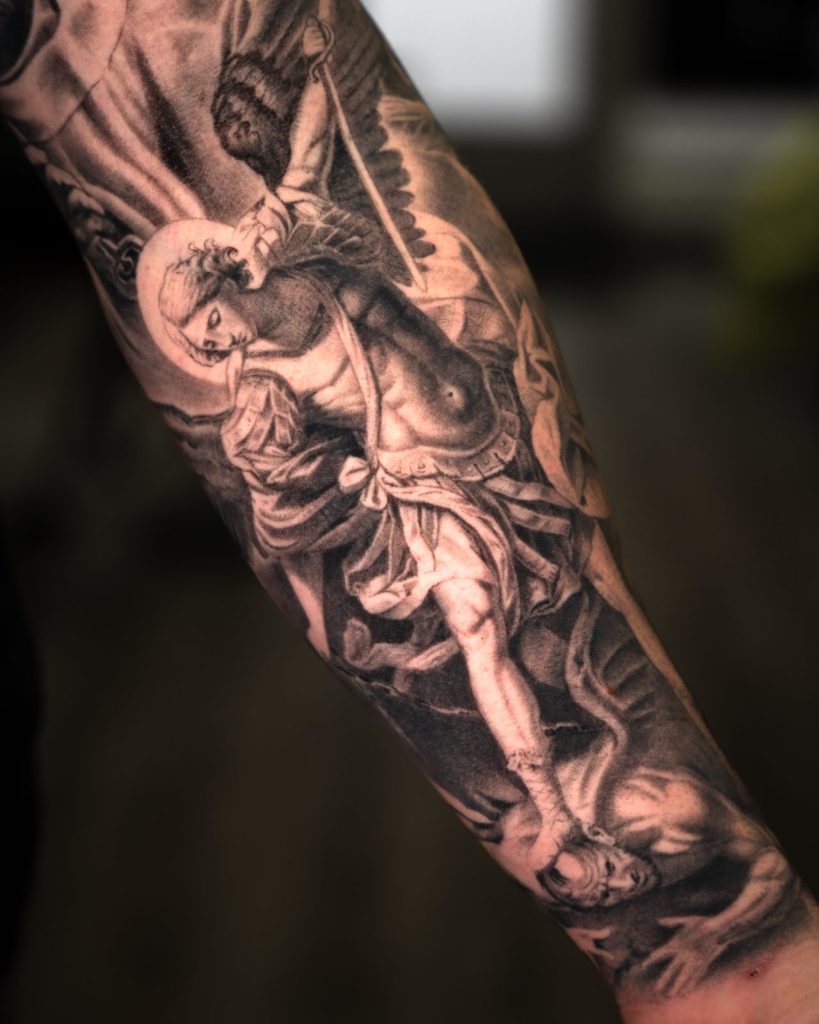
Every body heals at its own pace, and large or heavily shaded pieces like black and grey realism take longer than small fine line linework. Clients from east Scarborough can also read our tattoo aftercare guide for Malvern. As a general guide:
Days 1–3
Fresh and tender
Redness, mild swelling and some weeping of plasma and ink are normal. Keep it clean, wash gently two to three times a day and follow your artist’s wrap instructions.
Days 4–14
Peeling and itching
Thin flakes tinted with ink start to lift. Light scabbing is expected on dense shading. It will itch: tap or press, never scratch.
Weeks 2–4
Surface closes
Peeling finishes and the surface seals. The tattoo can look cloudy or milky under a thin layer of new skin. That is normal.
Weeks 4–8
Settles and clears
The cloudiness clears and the true contrast comes back. This is the right time to review it with your artist and plan any touch-up.
Daily routine
Your aftercare, step by step.
Your artist sends you home with written instructions tailored to your piece. This is the routine most of our clients follow.
01
Wash gently
Clean hands first, then lukewarm water and a mild, fragrance-free cleanser. No scrubbing, no loofahs.
02
Pat dry
Use a clean paper towel. Bath towels hold bacteria and the fibres can catch on healing skin.
03
Thin layer
Apply a very thin coat of fragrance-free moisturizer or the balm your artist recommends. It should look slightly matte, not greasy.
04
Let it breathe
Wear loose, clean clothing over it. Tight fabric rubs, traps heat and pulls at scabs.
05
No soaking
Showers are fine. Skip baths, pools, hot tubs, saunas and lakes until the surface is fully closed.
06
Stay out of the sun
Cover it while it heals, then use SPF 30 or higher once fully healed to keep blacks deep and lines crisp.
Sensitive skin
Choosing products for sensitive skin.
Eczema-prone and reactive skin heals best with fragrance-free, alcohol-free, hypoallergenic formulas. Patch test any new product on a small area 24 to 48 hours before it touches your tattoo, and tell your artist about eczema, psoriasis or allergies before your appointment.
Look for
✓ Ceramides
✓ Panthenol (vitamin B5)
✓ Aloe vera
✓ Shea butter
✓ Glycerin, calendula, bisabolol
✓ Fragrance-free and alcohol-free labels
“Unscented” is not the same as fragrance-free: unscented products can still contain masking fragrance.
Avoid while healing
✕ Artificial fragrance
✕ Denatured alcohol
✕ Retinol, AHAs and BHAs
✕ Tea tree oil on reactive skin
✕ Lanolin if you are wool-sensitive
✕ Heavy layers of petroleum jelly
What is normal
Normal healing vs when to get help.
Peeling, light scabbing and itching are all part of healing. Normal symptoms improve day by day. Symptoms that get worse instead need attention. If something looks wrong, send a photo to the studio through our contact page. You can compare your healing with fully healed pieces in our healed tattoo portfolio, all done at our tattoo shop in Scarborough.
Normal while healing
✓ Ink-tinted flakes when it peels
✓ Light, flat scabbing on dense shading
✓ Itching, especially in week two
✓ A cloudy or milky look for a few weeks
✓ Mild redness in the first few days
Contact your artist or a doctor
✕ Redness or swelling that spreads or worsens after day three
✕ Pus, a bad smell or yellow-green discharge
✕ Pain that increases instead of easing
✕ Fever or chills
✕ Raised, very itchy bumps that keep coming back
If you suspect an infection, see a healthcare professional. Do not try home remedies first.
Pain and comfort
Managing pain, before and during.
Pain is personal, and for most people it is far more manageable than they expect with the right preparation.
01
Before your session
Sleep well, eat a proper meal and drink plenty of water. Skip alcohol the night before, as it thins the blood and makes the session harder.
02
During the session
Slow, steady breathing calms your nervous system. Music, a podcast or chatting with your artist moves your focus away from the needle.
03
Breaks are normal
Tell your artist when you need a pause. Short, planned breaks keep long realism sessions comfortable and the work steady.
04
Placement matters
Ribs, spine, ankles and elbows sit close to bone and tend to feel sharper. Thighs, upper arms and calves are usually easier.
05
Numbing creams
Topical numbing creams help some clients, but always ask your artist first. Some creams change how skin takes ink.
06
After the session
A cold compress (never ice directly on skin) eases swelling and soreness on the first day.
Healing in the GTA
Ontario weather changes the routine.
From November to March, forced-air heating dries skin out fast, so winter tattoos usually need moisturizing a little more often and are more prone to tight, cracking scabs. Heavy layers rub, so keep clothing over the tattoo loose and clean.
In summer, sweat, sun and the temptation of pools and lakes are the biggest risks. Keep it covered from direct sun and stay out of the water until it has stopped peeling and the surface is fully closed.
Free consultation · Takes 45 seconds
Got an idea? Tell us in under a minute.
Pick your style and size, share your idea, and the right KCHN artist will reach out with placement advice and a clear quote. No obligation.
Aftercare FAQ
Healing questions.
How long does a tattoo take to heal?
The surface usually heals in two to four weeks. Deeper healing continues for a few more weeks, and large or heavily shaded pieces take longer than small linework.
Is it normal for ink to come off when my tattoo peels?
Yes. The flakes carry a little surface pigment, which is why they look coloured. The ink that forms your tattoo sits deeper and stays put.
Why does my tattoo look cloudy after peeling?
A thin layer of new skin covers the tattoo for a few weeks and can make black and grey work look milky. It usually clears by the four to eight week mark.
Can I put lotion on a scab?
Yes, a very thin layer of fragrance-free moisturizer is fine and keeps the scab flexible. Do not glob it on, and never pick it.
When can I go swimming?
Wait until the tattoo has stopped peeling and the surface is fully closed, which for most people is at least two to three weeks. Larger pieces can take longer.
When should I use sunscreen on my tattoo?
Keep a healing tattoo covered from the sun. Once it is fully healed, use SPF 30 or higher every time it is exposed to keep blacks deep and lines crisp.
What aftercare products are best for sensitive skin?
Fragrance-free, alcohol-free, hypoallergenic formulas with soothing ingredients like ceramides, panthenol and aloe. Patch test first and ask your artist for a recommendation for your skin.
When can I get a touch-up?
Wait at least four to six weeks so the skin fully heals, then review it with your artist. Any patchy areas can be touched up then.
Which tattoo placements hurt the most?
Areas close to bone or with thin skin, like the ribs, spine, ankles and elbows, tend to be the most sensitive. Fleshier areas like the thighs, upper arms and calves are usually easier.
Further reading
Healing and comfort guides.
Aftercare
Best Tattoo Aftercare Products for Sensitive Skin: A Complete Guide
Read the guide →
Pain
Effective Strategies to Manage Pain and Discomfort During Your Tattoo
Read the guide →
Healing
What Is the Proper Aftercare for a New Tattoo?
Read the guide →
Healing
Common Tattoo Aftercare Mistakes That Ruin Your Ink
Read the guide →
Healing
Recognizing Tattoo Infection Signs and Prevention
Read the guide →
Realism
Beginner’s Guide to Realism Tattoos: What You Need to Know
Read the guide →